


Blog
The Complete Guide to How a Maintenance Plan Extends Equipment Life test
Why How a Maintenance Plan Extends Equipment Life Matters for Metro Atlanta Homeowners
Understanding how a maintenance plan extends equipment life is one of the most valuable things you can do as a homeowner in Metro Atlanta. Here is the short answer:
A maintenance plan extends equipment life by:
- Catching small problems early before they trigger expensive chain-reaction failures
- Reducing friction and heat through regular lubrication and cleaning
- Maintaining airflow efficiency so motors and compressors don't overwork
- Protecting your warranty with documented professional service records
- Preventing thermal stress damage to heat exchangers and electrical connections
Equipment with consistent professional maintenance routinely lasts 20 to 30 years. Neglected units often fail within 5 to 10 years. That gap isn't about luck or brand — it's almost entirely about maintenance consistency.
Here in Georgia, that reality hits harder than most places. Atlanta summers push HVAC systems to their absolute limits. When temperatures climb into the 90s and your system is running 12 hours or more a day, every ignored maintenance task quietly accelerates wear. A dirty coil, a loose electrical connection, a failing capacitor — none of these feel urgent in February. By July, any one of them can leave your family sweating through a weekend waiting on an emergency repair.
The good news is that this kind of breakdown is almost always preventable. That's exactly what a well-structured maintenance plan is designed to do.
How a maintenance plan extends equipment life word guide:
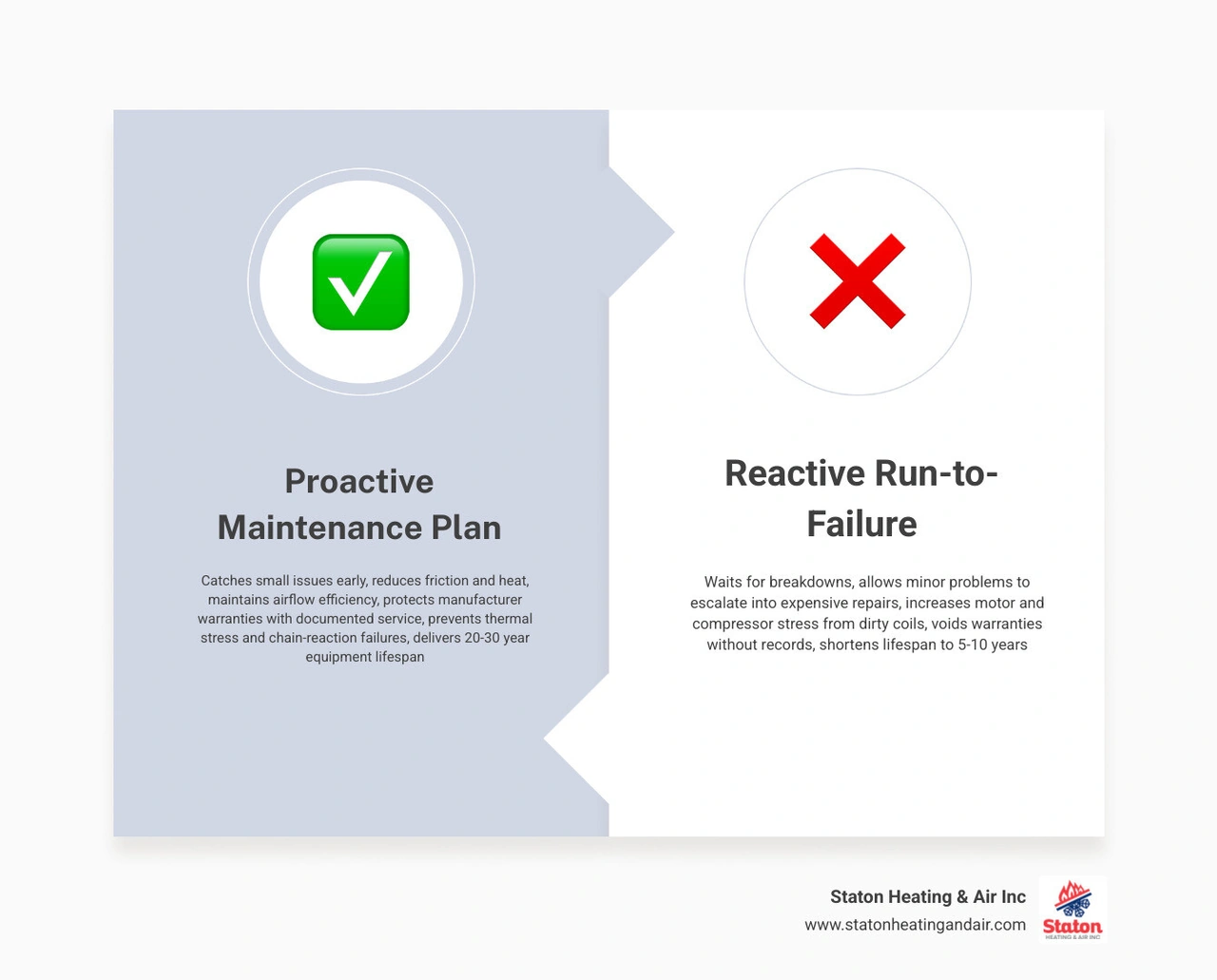
Proactive Care vs. Reactive Repairs: How a Maintenance Plan Extends Equipment Life
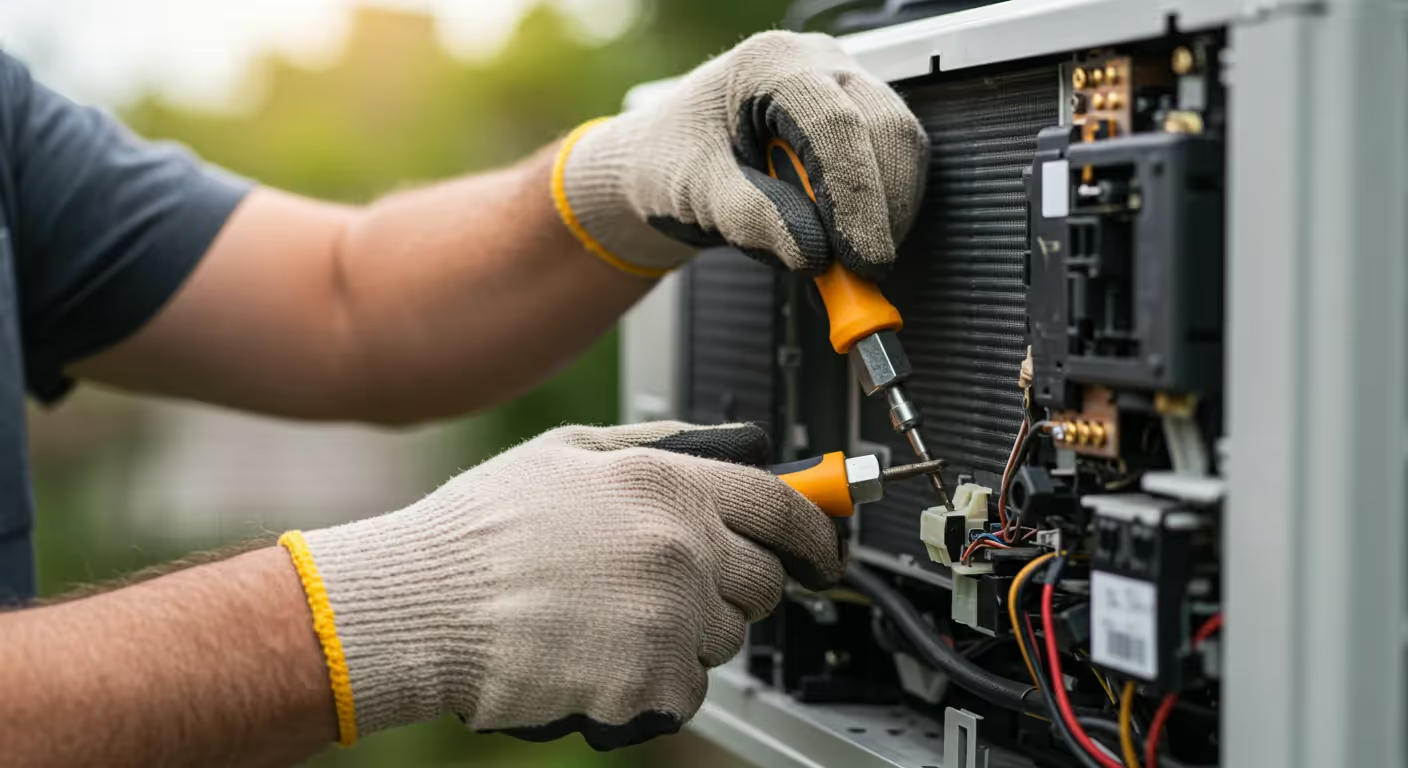
When it comes to managing your home comfort systems, you have two choices: you can take control of your system's health proactively, or you can wait for a crisis.
The reactive approach — often called "run-to-failure" — is the most expensive way to manage any home appliance. Under a run-to-failure model, equipment is ignored until it stops working. This creates a stressful cycle of emergency breakdowns, expensive parts replacements, and sleepless, humid nights. In the middle of an intense Georgia summer, waiting until your air conditioner completely breaks down before calling for help is a recipe for disaster.
In contrast, a proactive maintenance plan shifts the dynamic. Instead of reacting to emergencies, you prevent them. By scheduling routine, systematic inspections, you catch minor issues before they escalate. Think of it as a gym membership for your air conditioner; you invest a small amount of consistent effort to avoid massive "hospital bills" down the road.
This proactive approach directly addresses the "1:4 cost trap." Industry data shows that for every dollar saved by deferring routine maintenance, you will eventually spend an average of four dollars in premature repairs, emergency diagnostic fees, and inflated energy bills.
To help prevent these costly surprises, we focus on identifying and correcting system vulnerabilities long before they disrupt your life. You can learn more about how this works in our guide on How to Prevent HVAC Emergencies with Maintenance.
When you look at the numbers, the financial case becomes clear. Homeowners who invest in a structured service agreement consistently save money compared to those who pay for repairs on an ad-hoc basis. To see a detailed breakdown of the return on investment, explore our article on Do Maintenance Plans Save Money.
To illustrate the stark differences between these two philosophies, consider how they compare across key performance and financial metrics:
| Performance Metric | Proactive Maintenance Plan | Reactive Run-to-Failure Approach |
|---|---|---|
| Average HVAC Lifespan | 20 to 30 years | 5 to 10 years |
| Unplanned Downtime | Reduced by up to 40% to 75% | Frequent, unpredictable, and highly disruptive |
| Energy Consumption | Optimizes airflow to keep bills stable | Up to 25% higher due to system strain |
| Repair Requirements | Reduces overall repair needs by 25% | Highly complex, cascading system failures |
| Manufacturer Warranty | Kept fully valid through documented service | Voided due to lack of professional maintenance records |
| Safety Risks | Minimized through regular electrical and gas audits | Elevated risk of electrical fires or carbon monoxide leaks |
How a maintenance plan extends equipment life through early detection
The secret to extending the life of your heating and cooling system lies in the "domino effect" of mechanical systems. Your HVAC unit is a highly synchronized machine where the performance of one component directly impacts the health of another. When a single minor part begins to degrade, it places extra stress on larger, more expensive components.
A classic example of this cascading failure involves the dual run capacitor. The capacitor acts like a temporary battery, providing the electrical boost your compressor and fan motor need to start up. Over time, heat and electrical use wear down the capacitor's ability to store energy.
If a weakened capacitor is left unaddressed, the compressor will struggle to start, drawing excessive electrical current and running at dangerously high temperatures. Eventually, this constant strain will burn out the compressor motor entirely.
Replacing a capacitor is a quick, inexpensive fix during a scheduled maintenance visit. Replacing a compressor, however, is one of the most expensive repairs in the industry—often forcing homeowners to replace the entire outdoor unit prematurely.
Thermal cycling also plays a major role in early component failure. As your system turns on and off, electrical currents flow through terminals, causing them to expand and contract. Over months of continuous operation, this thermal expansion causes electrical connections to loosen. Loose connections create electrical resistance, which generates heat. This heat can melt wire insulation, cause electrical arcing, and ultimately fry expensive control boards.
Through early detection during a maintenance visit, technicians can tighten these connections, test capacitor capacitance, and stop the domino effect in its tracks. If you are wondering whether these preventative steps are worth the investment, read our detailed analysis on Is an HVAC Maintenance Plan Worth It.
How a maintenance plan extends equipment life by reducing operational stress
Every mechanical system must battle three primary enemies: friction, heat, and dirt. When these forces are left unchecked, they increase the operational stress on your system, forcing it to work harder and run longer to achieve the same indoor temperature.
Friction is a constant threat to rotating equipment like blower motors and bearings. Poor lubrication causes more mechanical failures than almost any other single factor. When oil or grease degrades, metal-on-metal contact creates friction, which generates excessive heat. This heat damages the motor's internal windings, leading to a sudden burnout. During a routine maintenance visit, technicians clean and lubricate these moving parts, ensuring they glide smoothly with minimal resistance.
Airflow restriction is another major source of operational stress. Imagine trying to run a marathon while breathing through a drinking straw. That is exactly what your HVAC system experiences when it is forced to push air through a clogged filter, dirty evaporator coils, or blocked registers.
When airflow is restricted, the blower motor must work twice as hard to move air through your home. This restricted airflow also prevents the refrigerant from absorbing heat properly, which can cause the evaporator coil to freeze over.
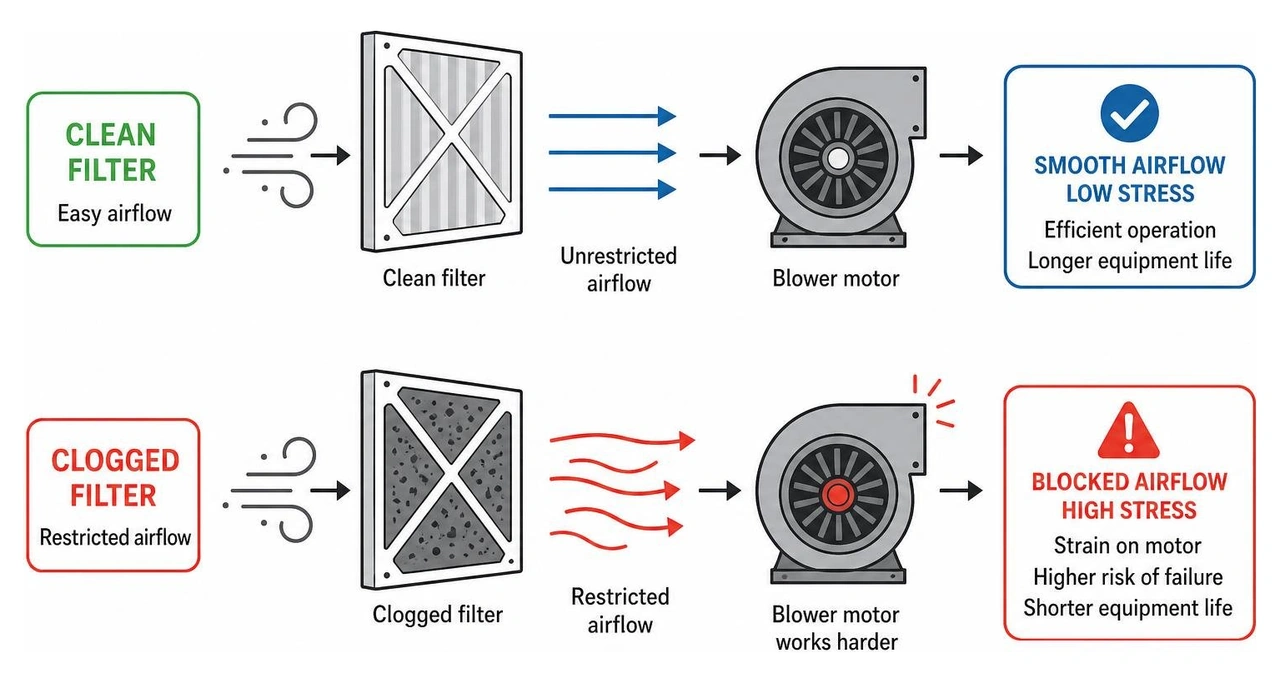
Furthermore, dirty condenser coils on your outdoor unit act as an insulating blanket. The outdoor coil's job is to release the heat absorbed from inside your home. If the coil is coated in grass clippings, dirt, and pollen, the heat remains trapped inside the system.
This raises the operating pressure of the refrigerant, forcing the compressor to run hotter and consume up to 25% more energy. By keeping your coils clean and your airflow unrestricted, a maintenance plan dramatically reduces this operational stress, allowing your system to run cooler and last longer. To learn more about how this translates to daily system performance, check out our article on Does Regular AC Maintenance Really Improve Performance.
The Physical Science of Equipment Aging and Wear
To truly understand how a maintenance plan extends equipment life, we have to look at the physical science of how materials degrade. HVAC systems do not simply wear out because of calendar years; they wear out because of the physical forces of thermal stress, environmental contamination, and chemical degradation.
One of the most critical areas affected by thermal stress is the furnace heat exchanger. When your furnace fires up, the metal heat exchanger gets incredibly hot, expanding to accommodate the temperature rise. When the heating cycle ends, the metal cools and contracts. This constant expansion and contraction is called thermal cycling.
If your system suffers from restricted airflow (due to dirty filters or a failing blower motor), the heat exchanger will overheat during each cycle. This extreme heat weakens the metal, eventually leading to microscopic cracks. A cracked heat exchanger is not just a system-ending failure; it is a life-threatening safety hazard that can leak carbon monoxide into your home's air supply.
In addition to thermal stress, environmental factors like humidity and airborne particles accelerate wear. In Metro Atlanta, high summer humidity creates a damp environment inside your indoor AC unit. When dust passes through a neglected filter, it sticks to the wet surface of the evaporator coil. This dust and moisture combination acts as a breeding ground for biological growth, including mold and mildew.
This buildup blocks airflow and can release unpleasant odors and spores into your home. Regular professional cleaning removes this organic matter, protecting your indoor air quality and preventing corrosion on the delicate aluminum fins of your coils. For more information on how proactive care keeps your system clean, read our article on How Proper HVAC Maintenance Prevents Mold Growth.
For homeowners living in areas like Alpharetta, GA, local environmental factors like heavy pollen seasons and red clay dust can make these issues even worse. Keeping your outdoor unit free of local debris is essential for maintaining proper heat transfer. You can find localized upkeep strategies in our guide on HVAC Maintenance Tips Alpharetta GA.
Essential Components of a Longevity-Focused Maintenance Plan
An effective maintenance plan is not just a quick visual inspection and a filter swap. To truly extend the life of your equipment, a maintenance visit must include a detailed, multi-point technical audit designed to restore your system to its peak operating condition.
A comprehensive, longevity-focused maintenance plan should always include these essential tasks:
- Electrical System Tuning: Technicians measure voltage and amperage on motors, tighten all electrical connections, and inspect contactors for pitting or wear. This prevents electrical arcing and protects expensive control boards.
- Sensor and Thermostat Calibration: Thermostats and system sensors must be calibrated to ensure they are reading indoor temperatures accurately. If a sensor is out of calibration, the system may short-cycle (turn on and off too frequently), which dramatically increases wear on the compressor.
- Deep Cleaning Protocols: This includes washing the outdoor condenser coil, cleaning the indoor evaporator coil, and clearing the condensate drain line. Removing dirt and blockages prevents water damage and optimizes heat transfer.
- Lubrication of Moving Parts: Applying high-quality lubricant to motor bearings and shafts reduces friction, lowers operating temperatures, and prevents motor burnouts.
- Safety Audits: For gas-heating systems, a safety audit is critical. Technicians inspect the gas manifold pressure, test flame sensors, check the flue vent for blockages, and examine the heat exchanger for cracks or corrosion to prevent carbon monoxide leaks.
- Refrigerant Level Verification: Operating with too little or too much refrigerant strains the compressor and lowers efficiency. Technicians check pressures and temperatures to ensure the system is charged to precise manufacturer specifications.
By addressing these core areas, a professional maintenance plan keeps your system running at maximum efficiency while preventing unexpected breakdowns. To learn more about the long-term advantages of these comprehensive checks, read about the Benefits of Regular AC Maintenance.
If you are considering enrolling in a structured program, you will find that the convenience, priority service, and peace of mind make it an easy choice. Read more on why this investment pays off in our article Why a Service Agreement is Worth Every Penny.
Scheduling and Homeowner Best Practices for Maximum Lifespan
While having a professional technician service your system is essential, maximizing your HVAC system's lifespan is a team effort. Consistency is key, both in how you schedule professional visits and how you care for your system between those visits.
First, let's talk about timing. To keep your system in top shape, you should schedule professional maintenance twice a year: once in the spring for your air conditioner, and once in the fall for your heating system. If you use a heat pump system, which handles both cooling and heating, biannual maintenance is still highly recommended because the system runs year-round.
Scheduling your service during the mild "shoulder seasons" (spring and autumn) ensures your system is fully prepared before extreme weather hits. To learn more about the best timing for your heating system, check out our guide on How Often Should a Heating System Be Serviced.
Between professional visits, there are several simple steps you can take to support your system's health and keep your home comfortable:
- Check and Change Your Air Filters: This is the single most important maintenance task a homeowner can perform. Check your filters every 30 to 90 days, depending on your household (homes with pets or high dust levels may need changes every month). A clean filter ensures unrestricted airflow and protects internal components from dust buildup.
- Keep the Outdoor Unit Clear: Walk around your outdoor condenser unit regularly. Clear away fallen leaves, pine needles, tall grass, and weeds. Maintain at least a two-foot clear zone around the unit to ensure it has plenty of room to breathe and release heat.
- Do Not Block Vents and Registers: Ensure that furniture, drapes, or rugs are not blocking your indoor supply and return vents. Blocking these vents disrupts airflow and increases static pressure inside your ductwork, straining your blower motor.
- Avoid Closing Too Many Registers: A common myth is that closing vents in unused rooms saves energy. In reality, closing more than 10% of your home's registers throws your system out of balance, increasing pressure and thermal stress on your equipment.
- Monitor Your System's Performance: Pay attention to how your system sounds and performs. If you notice new noises, weak airflow, or strange odors, do not wait for your next scheduled visit—reach out for a professional check right away.
By combining consistent professional maintenance with these simple home habits, you will enjoy a more reliable system, lower energy bills, and a more comfortable home. For more tips on keeping your indoor environment perfect, read our article on HVAC Maintenance for Comfort.
Frequently Asked Questions about HVAC Longevity
How often should I schedule professional maintenance in Metro Atlanta?
For standard split systems (an air conditioner paired with a gas furnace), you should schedule professional maintenance twice a year. We recommend scheduling a cooling tune-up in the spring (March or April) and a heating tune-up in the fall (September or October).
If your home uses a heat pump, it should still be serviced twice a year because it operates during both the cooling and heating seasons. Regular, biannual visits ensure that your system is clean, safe, and ready to handle Georgia's humid summers and chilly winter nights.
Does skipping professional maintenance void my manufacturer warranty?
Yes, in many cases it does. Most major HVAC manufacturers (including Trane, Carrier, and Lennox) require proof of regular, annual professional maintenance to honor warranty claims on major components like compressors and heat exchangers.
If a major part fails under warranty but you cannot provide documented service records from a professional HVAC company, the manufacturer may deny your claim, leaving you responsible for the entire cost of the repair. Enrolling in a maintenance plan ensures you always have the necessary documentation to keep your warranty fully valid.
What are the common warning signs that my equipment needs immediate attention?
You should contact a professional if you notice any of the following warning signs:
- Unusual Noises: Squealing, rattling, grinding, or popping sounds indicate loose components, failing bearings, or electrical issues.
- Short-Cycling: If your system turns on and off every few minutes without completing a full cycle, it is placing massive stress on the compressor and electrical components.
- Rising Utility Bills: A sudden, unexplained jump in your energy bills (without a corresponding change in the weather) means your system is losing efficiency and working harder than it should.
- Poor Airflow: Weak airflow from your vents can point to a failing blower motor, a severely clogged filter, or blocked ductwork.
Conclusion
At Staton Heating & Air Inc, we have been keeping families comfortable throughout Cumming, GA, and the Metro Atlanta area since 1972. Our commitment to customer satisfaction is built on our core philosophy: "Where customers come first!"
With our team of NATE-certified technicians—proudly recognized as the Best HVAC Company in Cumming—we have the expertise, local knowledge, and dedication to keep your heating and cooling systems running at peak performance for decades.
Investing in a maintenance plan is the single most effective step you can take to protect your home comfort investment, lower your energy bills, and avoid the stress of sudden breakdowns. Let our family take care of yours.
Explore our Comfort Club Memberships today to find the perfect maintenance plan for your home, or reach out to us to schedule your next seasonal tune-up!
Recent Posts
What Our Customers Are Saying

Will at Staton Heating & Air, Inc. was very helpful. He assisted after regular business hours. We will use Staton Heating & Air, Inc. from now on.
Dina R.
Steven was very thorough on servicing both units inside and out.
Philip M.
Staton Heating & Air, Inc. is the best air-conditioning company we have found here in Georgia. We have been with them for 12 years. The service is impeccable. A young man named Todd one of their workers came and fixed our unit. He was courteous polite and very knowledgeable about our Lenox unit. The lady in the office by the name of Gail was absolutely wonderful.
Jo De St.
Rob called before coming, as promised. He was polite, friendly, and efficient.
Phyllis S.
Carlos went above my expectations in servicing my air conditioning unit. He worked long and hard to unclog a drain pipe. Many thanks and Kudos!!!!
Vickie G.
Very friendly, patient, and took their time to fully assess our HVAC systems.
John J.
Steven Chen did an outstanding job servicing our HVAC units. We were amazed at how thorough he was and how much time he took, especially on the outside units.
Bob Z.
Great professional service. Would not hesitate to recommend.
Lisa H.


.avif)
Ready to Transform Your Home?
Upgrade your HVAC system for improved comfort, energy efficiency, and air quality. Discover the benefits of modern heating and cooling solutions tailored to your needs!

Explore insights on heating and air conditioning.
Recent Blog


Financing

Payment Options:


4.9

Copyright © 2024 Staton Heating and Air Conditioning
Designed & Developed By :
