Article
How to Apply for Energy Rebates in Georgia: 5 Easy Steps
How to Apply for Energy Rebates in Georgia (And Why It's Worth Your Time)
Knowing how to apply for energy rebates in Georgia could put thousands of dollars back in your pocket on home energy upgrades you may already be planning. Georgia's Home Energy Rebate programs — funded through the federal Inflation Reduction Act — offer eligible households up to $16,000 in savings on everything from heat pump installations to insulation and air sealing.
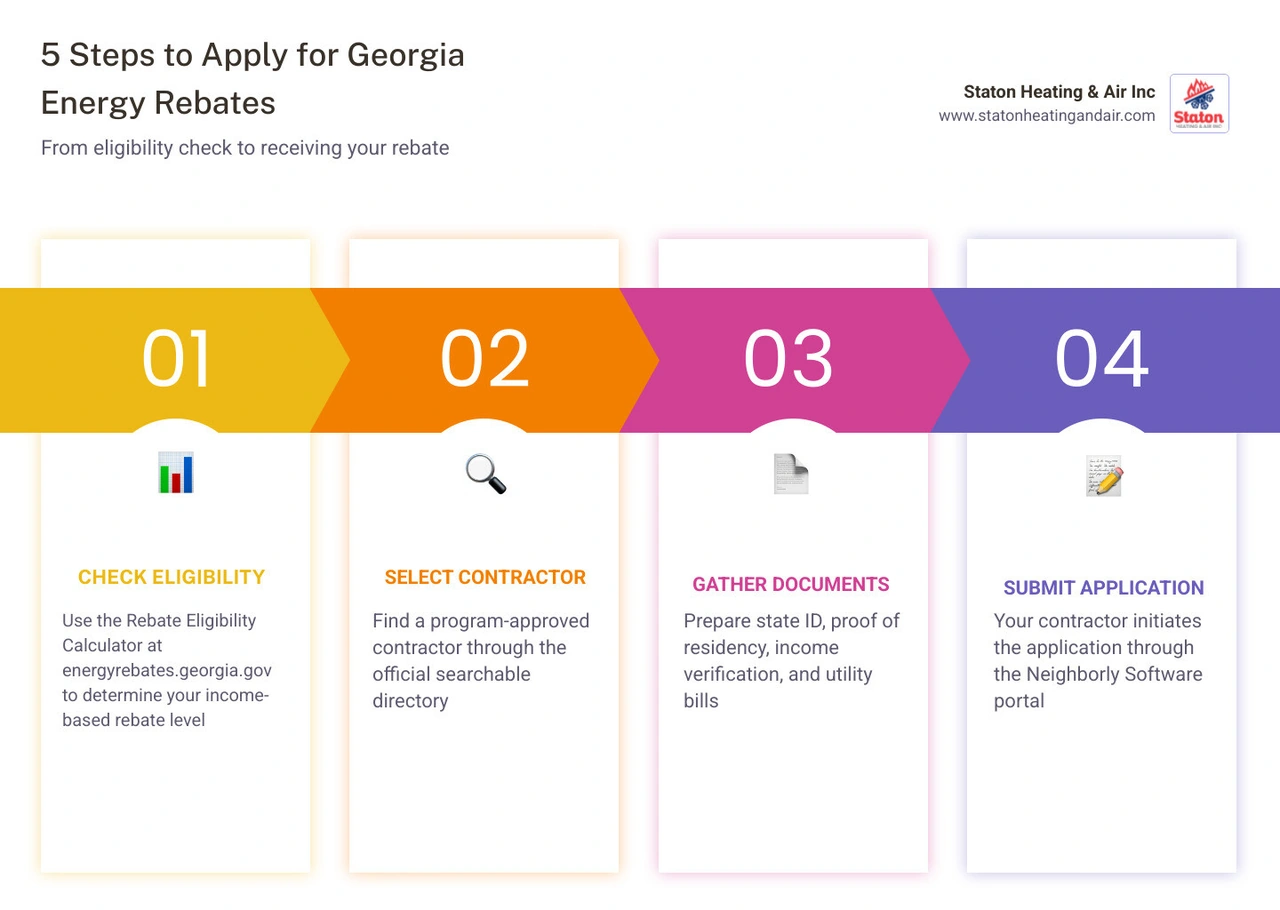
Here is a quick overview of the five steps to apply:
- Check your eligibility using the online Rebate Eligibility Calculator Tool at energyrebates.georgia.gov
- Find a program-approved contractor through the official searchable directory
- Gather your required documents — state-issued ID, proof of residency, and income verification
- Submit your application through the Neighborly Software portal (your contractor initiates this step)
- Complete the installation and receive your rebate — most often as a direct discount off your project cost
Whether you are a homeowner in Alpharetta, Kennesaw, Cumming, or anywhere across Metro Atlanta, these programs are designed to reduce the upfront cost of energy-efficient upgrades — and in many cases, low-income households may pay little to nothing out of pocket.
Georgia actually runs two separate rebate programs with different eligibility rules and covered improvements, so understanding which one fits your situation is the most important first step. The good news is that with the right contractor and a clear checklist, the process is more straightforward than most homeowners expect.
Understanding Georgia’s Home Energy Rebate Programs (HER vs. HEAR)
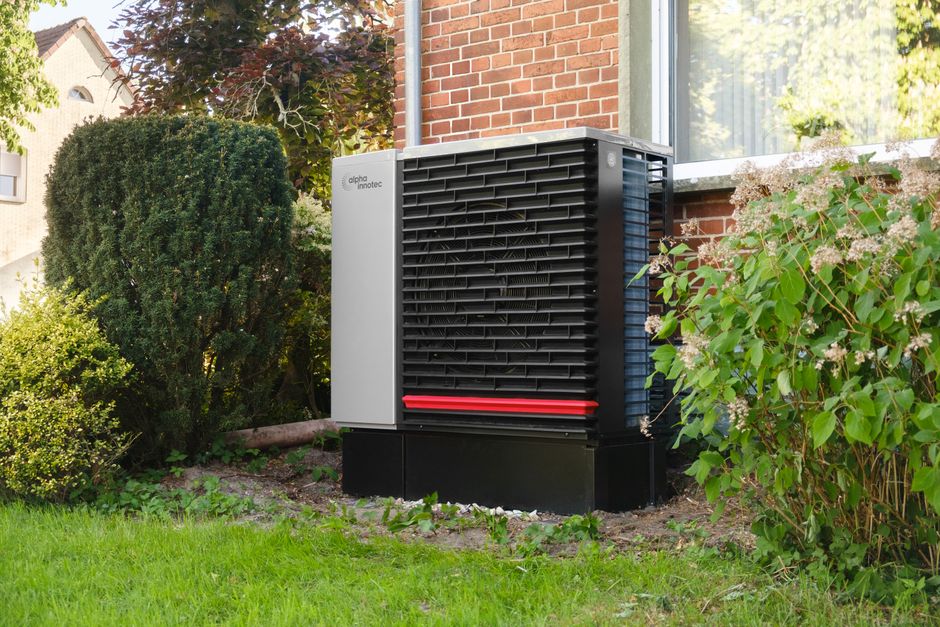
Georgia launched its statewide Home Energy Rebate programs to help households lower their utility bills, enjoy a more comfortable living space, and invest in high-efficiency upgrades. However, navigating the system requires understanding that there are actually two distinct pathways funded by the federal government: the Home Efficiency Rebates (HER) program and the Home Electrification and Appliance Rebates (HEAR) program.
While both programs aim to curb energy waste, they target different types of projects and use unique criteria to calculate your final savings.
Home Efficiency Rebates (HER)
The HER program is a performance-based pathway. Instead of focusing on a single appliance, it looks at the whole-home picture. To qualify for this program, your energy efficiency upgrades must reduce your household's overall energy consumption by a minimum of 20%.
Rebate amounts under HER are determined by your Area Median Income (AMI) and the actual percentage of energy savings you achieve. If your household income is under 80% of your local Area Median Income and you achieve a 35% or higher reduction in energy use, you could qualify for up to $16,000 in rebates. For middle- and higher-income households, the maximum rebate is generally capped lower, but still provides substantial relief.
Home Electrification and Appliance Rebates (HEAR)
The HEAR program is a point-of-sale rebate program specifically designed for individual high-efficiency electric appliances and equipment upgrades. This program is highly targeted toward low- to moderate-income families (those earning under 150% of the Area Median Income).
Through HEAR, qualifying households can access up to $14,000 in total lifetime rebates. This includes up to $8,000 for space heating and cooling heat pumps, up to $1,750 for heat pump water heaters, and up to $840 for electric stoves, cooktops, ranges, or ovens. It also covers necessary electrical upgrades, such as panel boxes and wiring, when completed alongside an eligible appliance upgrade.
To help you decide which path makes the most sense for your home, we have put together a guide on Georgia Energy Rebates for HVAC Upgrades that details how these programs apply directly to heating and cooling. Additionally, you can learn more about the financial returns of these systems by reading How Much Does a High Efficiency System Save.
| Feature | Home Efficiency Rebates (HER) | Home Electrification and Appliance Rebates (HEAR) |
|---|---|---|
| Primary Focus | Whole-home retrofits & overall energy savings | Targeted electric appliance upgrades |
| Minimum Energy Savings | Must achieve at least a 20% reduction | No minimum reduction required (appliance-specific) |
| Income Limits | Open to all income levels (higher rebates for <80% AMI) | Restricted to households earning <150% AMI |
| Maximum Rebate | Up to $16,000 (depending on income & savings) | Up to $14,000 total lifetime savings |
| Typical Upgrades | Air sealing, insulation, duct sealing, HVAC | Heat pump HVAC, heat pump water heaters, electric stoves |
Why Knowing How to Apply for Energy Rebates in Georgia Saves You Money
Making the switch to high-efficiency systems is one of the smartest decisions an Atlanta-area homeowner can make. When you upgrade to a modern heat pump or pair your system with a smart thermostat, you are not just qualifying for upfront cash back; you are also driving down your monthly operating costs.
For instance, heat pumps can reduce electricity use for heating by up to 50% compared to older electrical resistance systems. If you are wondering whether smart technology is worth the jump, check out our post on Is Upgrading to a Smart AC System Worth It. These smart controls learn your schedule and adjust automatically, which works hand-in-hand with high-efficiency hardware to lower your bills. You can explore how these combined improvements help control hot-weather utility spikes in our article on How High Efficiency Systems Reduce Summer Costs.
Eligibility Requirements for Georgia Homeowners and Renters
Eligibility for both the HER and HEAR programs is largely determined by your household size and your total income relative to the Area Median Income (AMI) of your county. Because the AMI is calculated annually by the U.S. Department of Housing and Urban Development (HUD), the income limits vary depending on where you live. For example, the 150% AMI threshold for a four-person household in the Atlanta-Sandy Springs-Roswell metro area will look different from rural counties in Georgia.
Income Verification and Categorical Eligibility
When you apply, you must verify your household income. This can be done by providing tax returns (referencing your Adjusted Gross Income, or AGI), recent paystubs from the last 60 days, or bank statements.
Alternatively, Georgia offers a streamlined "categorical eligibility" pathway. If you or someone in your household already participates in certain state or federal assistance programs, you automatically qualify as low-income (under 80% AMI) without needing to submit tax documents. Qualifying programs include:
- Low Income Home Energy Assistance Program (LIHEAP)
- Medicaid
- Supplemental Nutrition Assistance Program (SNAP)
- Women, Infants, and Children (WIC)
- Supplemental Security Income (SSI)
Renter and Landlord Rules
A common misconception is that energy rebates are only for property owners. Renters are fully eligible to participate in both the HER and HEAR programs! However, because these upgrades involve permanent modifications to the property’s HVAC, electrical, or structural systems, renters must obtain written permission and authorization from the property owner.
Landlords and multifamily building owners can also initiate these projects. If a landlord upgrades an entire rental property or multifamily building where at least 50% of the tenants meet the income requirements, the building can qualify for substantial rebate percentages—sometimes covering up to 100% of the project costs under HEAR.
Navigating these requirements can feel overwhelming, but our Atlanta HVAC Complete Guide provides a thorough look at how local climate and housing structures influence utility programs and home comfort upgrades across Metro Atlanta.
Step-by-Step Guide: How to Apply for Energy Rebates in Georgia
Ready to claim your share of the savings? The state of Georgia uses the online Neighborly Software portal to manage, track, and process all rebate applications. This unified portal ensures that your income data remains secure and that your project is verified every step of the way.
Here is the detailed, step-by-step breakdown of how to apply for energy rebates in Georgia.
Step 1: Check Your Eligibility and Calculate Your Rebate Level
Before you contact a contractor or purchase any equipment, visit the official Georgia state energy rebates portal at energyrebates.georgia.gov. Use the online Rebate Eligibility Calculator Tool to input your county, household size, and estimated household income.
The tool will cross-reference your details with the HUD income limits and tell you exactly which program (HER, HEAR, or both) you qualify for, as well as your tier level (e.g., under 80% AMI or under 150% AMI). If you are pursuing the whole-home HER program, this is also the stage where you should consider scheduling a home energy assessment to identify where your home is losing energy and how to achieve that vital 20% savings threshold.
Step 2: Find and Select a Program-Approved Contractor
For almost all upgrades under the HER and HEAR programs (excluding select DIY kitchen appliance rebates), you must work with a program-approved contractor. The state maintains a searchable directory of approved contractors who have been vetted, carry proper insurance, and are trained to submit the required engineering data.
Working with an approved HVAC professional ensures that your system is sized correctly and installed to meet strict ENERGY STAR standards. Beyond saving you money on your monthly bills, installing a certified high-efficiency system is a long-term investment. Read more about how these professional upgrades pay off down the road in How a New HVAC System Increases Home Value.
Step 3: Gather Your Required Documents and Proof
To prevent application delays, gather your documentation before starting the online process. You will need:
- A valid state-issued photo ID (such as a Georgia driver's license).
- Two separate forms proving residency at the service address (e.g., a recent utility bill, mortgage statement, or lease agreement).
- Income verification documents (such as your latest federal tax return, W-2s, or paystubs) OR proof of active participation in a categorical eligibility program like SNAP or LIHEAP.
- Signed landlord authorization forms if you are renting the property.
Step 4: Submit Your Application and Learn How to Apply for Energy Rebates in Georgia Online
Once you have selected an approved contractor and agreed on a Scope of Work, the contractor will log into the Neighborly platform and initiate your application.
After the contractor inputs the technical details of the project, you will receive an email invitation to log into the Neighborly portal. You will create an account, fill out your household profile, upload your personal identification and income documents, and electronically sign the terms and agreements. The system will review your documents—often using automated verification—to confirm your rebate eligibility.
Step 5: Complete the Installation and Receive Your Rebate
With your application approved in the portal, your contractor can begin the installation.
For contractor-led installations, you do not have to wait months for a reimbursement check. The approved contractor will apply the rebate as a direct, point-of-sale discount on your final invoice. The contractor is then reimbursed directly by the state.
If you are using the HEAR DIY pathway for a qualifying kitchen appliance (like an induction cooktop), you will purchase the appliance, install it yourself, and submit your receipts, geotagged photos of the installed unit, and payment profile to the Neighborly portal within 90 days of purchase to receive a direct reimbursement.
Frequently Asked Questions About Georgia Energy Rebates
Can I combine state energy rebates with Georgia Power incentives and federal tax credits?
Yes! This is known as "rebate stacking," and it is the best way to maximize your savings. You can combine Georgia’s Home Energy Rebates with federal tax credits—such as the Energy Efficiency Home Improvement Credit (Section 25C), which provides up to a 30% tax credit (up to $2,000) for qualifying heat pumps and heat pump water heaters.
You can also stack these with local utility programs like the Georgia Power Home Energy Improvement Program, which offers individual rebates for smart thermostats, air sealing, and duct sealing. However, there is one important rule: you cannot claim the exact same individual upgrade under both HER and HEAR. For example, you cannot use HEAR to cover a heat pump installation and then claim that same heat pump to qualify for a HER whole-home rebate. You can, however, use HEAR for your heat pump and HER for your attic insulation and air sealing.
Note: Georgia Power rebate applications must be submitted within 60 days of the paid-in-full invoice date, and processing typically takes 6 to 8 weeks.
Are retroactive rebates available for projects completed before July 2026?
Retroactive rebates are possible under very specific conditions. For the HER program, whole-home projects initiated on or after August 16, 2022, may qualify for retroactive rebates if they meet all program documentation requirements. This includes having proper energy-use data and modeling software proof that demonstrates a minimum 20% energy savings.
For the HEAR program, retroactive rebates are generally limited to the DIY pathway for select kitchen appliances and heat pump clothes dryers, provided the application is submitted through the Neighborly portal within 90 days of the purchase date.
What should I do if there are no approved contractors in my area?
If you cannot find an approved contractor in your immediate area within the directory, you have a few options. First, check if any statewide participating contractors service your county, as many larger Metro Atlanta HVAC companies travel to surrounding areas.
Second, you can encourage your preferred licensed HVAC contractor to fill out the Program Contractor Interest Form on the state portal to become approved. Finally, for select kitchen appliances and heat pump dryers, you can bypass the contractor requirement entirely by utilizing the HEAR DIY pathway.
Conclusion
Navigating the application process for Georgia's Home Energy Rebates is incredibly rewarding when you have the right team in your corner. By taking advantage of these state and federal incentives, you can enjoy a more comfortable, energy-efficient home while keeping your hard-earned money in your wallet.
At Staton Heating & Air Inc, we have been serving homeowners in Cumming, GA, and across Metro Atlanta since 1972. Our NATE-certified technicians are dedicated to delivering top-tier comfort solutions, and we were proudly named 2024's Best HVAC Company in Cumming. Whether you live in Alpharetta, Roswell, Johns Creek, Suwanee, or Marietta, we are here to help you select, install, and maximize your savings on a new high-efficiency heating and cooling system.
Ready to upgrade your home comfort and lower your energy bills? Contact us today to explore our Expert HVAC Services in Georgia and let our team guide you through your next energy-saving project!
What Our Customers Are Saying



Have a comfort question?
Our family-owned team has answered them for over 50 years. Reach out anytime.
Get in touchFrom our family to yours
Ready for comfort done right?
Family-owned since 1972. Call now or book online — a real person is standing by to help.
Licensed & Insured · GA LIC# CU400373 · NATE Certified · 100% Satisfaction Guarantee