
Article
AC Making Strange Noises What They Mean: 8 Urgent Fixes
What AC Making Strange Noises Really Means — and Why It Matters
AC making strange noises is your system's way of sending an early warning before a small problem turns into a costly breakdown. Whether you're hearing a sudden bang from your outdoor unit, a persistent hiss near your vents, or a high-pitched squeal at startup, each sound usually points to a specific component that needs attention.
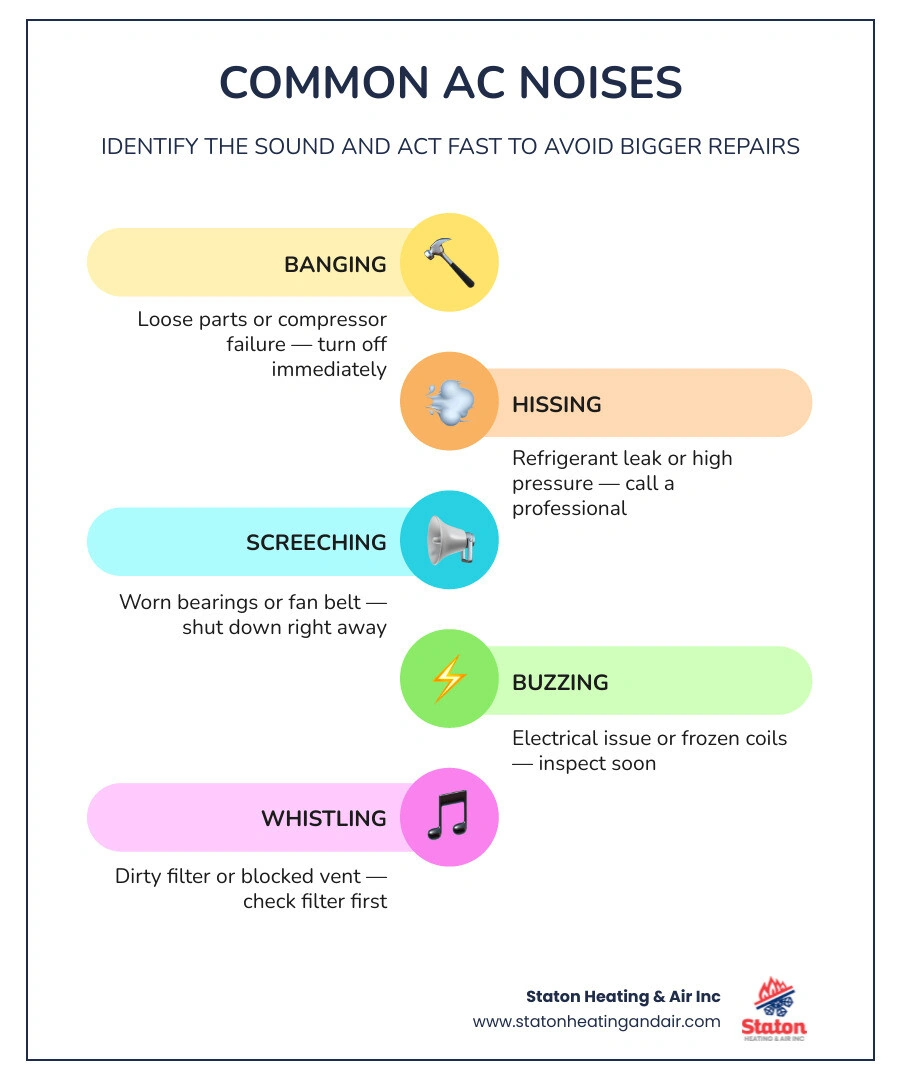
Here's a quick reference for the most common AC noises and what they typically mean:
| Noise | Likely Cause | Urgency |
|---|---|---|
| Banging / Clanking | Loose or broken part inside the unit | High — turn off immediately |
| Hissing | Refrigerant leak or high compressor pressure | High — call a professional |
| Screeching / Squealing | Worn motor bearings or fan belt issue | High — shut down right away |
| Buzzing | Electrical problem or frozen coils | Medium-High — inspect soon |
| Grinding | Worn motor bearings | Medium-High — schedule repair |
| Rattling | Loose panel, debris, or fan blade | Medium — check and tighten |
| Whistling | Dirty air filter or blocked vent | Low — check filter first |
| Clicking (repeated) | Electrical or thermostat issue | Medium — monitor closely |
Most modern AC systems operate between 25 and 55 decibels under normal conditions — some high-efficiency models run as quietly as 19 decibels, which is softer than a whisper. So when your system starts sounding like something is knocking around inside, that's a clear sign something is off.
Ignoring unusual sounds doesn't just affect your comfort. It can turn a simple, inexpensive fix into a major repair — or even a full system replacement. A loose part that costs very little to address today can break free and damage a compressor, which is the most expensive component in your entire system.
In this guide, Staton Heating & Air Inc breaks down the most common AC noises, what they mean, which ones require you to shut your system off immediately, and what safe steps you can take before calling a technician.
Deciphering Your AC Making Strange Noises What They Mean
Living in Metro Atlanta, we rely heavily on our air conditioning units to keep our homes cool and comfortable during humid Georgia summers. When everything is running smoothly, your AC is practically invisible. You might hear a gentle, rhythmic whoosh of air moving through your vents or a low, steady hum from the outdoor condenser unit. These are completely normal operational sounds.
But what happens when that quiet background hum turns into a jarring racket? Suddenly, you are left wondering about your ac making strange noises what they mean for your comfort, your safety, and your wallet.
To protect your system, it helps to understand the difference between normal startup sounds and actual warning signs. For instance, a single click when your system turns on or off is simply the electrical contactor engaging or disengaging. That is normal. However, if your system starts clicking repeatedly like a frantic metronome, or if a gentle hum escalates into a heavy vibration, your system is trying to tell you that a component is struggling.
Understanding these sounds early is the key to preventing catastrophic system failures. If you want to dive deeper into the basic psychology of a loud system, check out our guides on how to handle a Noisy AC Unit and explore our comprehensive breakdown of Strange AC Noises and Solutions.
8 Common AC Noises and Their Mechanical Causes
Your air conditioner is a highly complex machine with dozens of moving parts. Over time, normal wear and tear, dust accumulation, or neglected maintenance can cause these parts to slip out of alignment, lose lubrication, or fail entirely.
When you notice your AC Unit Making Noise, matching the specific sound to its mechanical cause is the first step toward finding a lasting solution. Let's look at the most common culprits.
Banging and Clanking Sounds
If your AC sounds like a dryer filled with loose change, you should take it very seriously. Banging or clanking sounds almost always point to a loose, detached, or unbalanced physical component inside the system.
Common causes include:
- A loose blower fan wheel: The fan inside your indoor air handler can become loose on its shaft, causing it to wobble and hit the surrounding metal housing.
- Bent or broken fan blades: If a twig or debris slips into your outdoor unit, it can bend a fan blade, causing it to strike other parts as it spins.
- A failing compressor: Inside your outdoor unit, the compressor pumps refrigerant under high pressure. Over time, internal parts like piston pins, connecting rods, or valves can break loose. When this happens, they rattle around inside the sealed compressor shell, creating a loud clanking noise.
If you suspect your compressor is the source of the racket, be sure to read about the Warning Signs of a Failing AC Compressor to avoid an unexpected shutdown in the middle of a hot summer day.
Hissing and Bubbling Noises
A persistent hissing or bubbling sound is a classic indicator of a pressurized leak.
- Hissing: Because the refrigerant in your system is kept under immense pressure, it makes a distinct hissing sound as it escapes through tiny cracks or pinholes in the copper coils.
- Bubbling or Gurgling: If the refrigerant level drops significantly, air pockets can form in the lines, leading to a bubbling or gurgling sound as the remaining liquid and gas mixture circulates.
If you live in Fulton or DeKalb county and suspect a leak, do not wait to take action. You can learn more about how this specific issue is diagnosed and repaired by reading about what happens when an AC Unit Is Leaking Refrigerant in Dunwoody.
Screeching and Squealing Sounds
A high-pitched screech or squeal is incredibly hard to ignore—and it should be. This sound is usually caused by metal-on-metal friction or belt slippage.
- Dry motor bearings: Both your indoor blower motor and your outdoor condenser fan motor rely on bearings to spin smoothly. If these bearings lose their lubrication or wear out, they will emit a piercing screech.
- Slipped blower belt: Older air conditioning systems often use belt-driven blower motors. If the belt becomes worn, frayed, or stretched, it will slip on the metal pulleys and squeal.
- High compressor pressure: In some cases, a brief, high-pitched screech or hiss at startup (lasting 10 to 15 seconds) can indicate dangerously high pressure building up inside the compressor.
If your system shuts down after making this noise, you might wonder if there is an easy fix. Learn more about how the system protects itself in our article: Is There a Reset Button on an ACs Compressor.
Buzzing and Humming Noises
A buzzing or heavy humming sound can stem from either electrical or mechanical issues.
- Electrical malfunctions: Failing capacitors, loose wiring, a malfunctioning contactor, or a failing relay switch can produce a distinct electrical buzz. If your outdoor unit hums but the fan refuses to spin, a dead capacitor or a seized fan motor is the likely culprit.
- Frozen evaporator coils: If airflow is restricted (often due to a dirty air filter), the indoor evaporator coil can drop below freezing and ice over. This ice buildup can cause the system to vibrate and emit a strange buzzing or thumping sound.
- Vibration and loose panels: Sometimes, a steady hum is amplified into a loud buzz simply because the metal panels of the AC cabinet have vibrated loose over time.
To understand how minor vibrations escalate into loud noises, check out our guide on Why Your AC Unit Is Vibrating Excessively.
Location Matters: Indoor Unit, Outdoor Unit, and Ductwork Noises
When you are trying to diagnose a noise, where the sound originates is just as important as what it sounds like. Air conditioning systems are split into distinct sections, and locating the source of the sound narrows down the potential mechanical issues significantly.
Indoor Air Handler Noises
The indoor unit (the air handler or furnace closet) is responsible for circulating air throughout your home. If you hear noises coming from your indoor unit, they are typically related to:
- The blower motor and wheel: Rattling, thumping, or grinding from inside your closets or attic usually points to a blower wheel that is dirty, unbalanced, or loose.
- The condensate drain: If you hear a gurgling or bubbling sound indoors, it could mean your condensate drain line is partially clogged, trapping pockets of water and air as the system tries to drain moisture pulled from your home's air.
- Electrical relays: A soft click when a cycle begins is normal, but constant clicking from the indoor air handler indicates a thermostat communication issue or a failing control board relay.
Outdoor Condenser Noises
Your outdoor unit contains the compressor, the condenser coil, and the condenser fan. Because it is exposed to the elements in yards across Cumming and Alpharetta, it is highly susceptible to outdoor debris:
- Debris intrusion: Twigs, leaves, pine needles, and acorns can easily fall through the top grate of your outdoor unit. If these items contact the spinning fan blades, they will create a rapid, rhythmic rattling or tapping sound.
- Compressor struggle: A deep, heavy hum or metallic clanking from the outdoor unit often indicates that the compressor is struggling to start or is reaching the end of its operational lifespan.
- Unlevel pad: If the concrete or plastic pad beneath your outdoor unit settles and becomes unlevel, the fan motor can run off-balance, causing a loud vibration or rattling against the outer cage.
Ductwork and Vent Noises
Sometimes, the air conditioner itself is perfectly quiet, but your ductwork is making a scene. Common duct-related sounds include:
- Thermal expansion (popping or creaking): As cold air rushes through your metal ducts, the metal contracts. When the system turns off and the ducts warm up, the metal expands. This temperature change causes normal, muffled popping or creaking sounds.
- Whistling or whooshing: If you hear a high-pitched whistling near your vents, it usually means your system is starved for air. This is frequently caused by a dirty air filter, closed supply registers, or blocked return vents.
- Flapping or rattling: Loose duct joints or peeling foil tape can allow air to escape, creating a flapping or whistling sound inside your walls or attic.
Actionable Solutions and Safe DIY Troubleshooting
While major mechanical and electrical issues always require a licensed professional, there are several safe, simple steps homeowners can take to troubleshoot and quiet down a noisy system.
Safe DIY Troubleshooting for an AC Making Strange Noises What They Mean
Before you call in the pros, walk through this safe DIY checklist to see if the issue is a simple fix:
- Check and replace the air filter: A heavily clogged air filter is the number one cause of whistling vents, buzzing from frozen coils, and thumping from motor strain. Replace your filter every 30 to 90 days.
- Clear outdoor debris: Turn off the power to your AC at the thermostat. Inspect the outdoor unit and carefully remove any twigs, leaves, or pine straw that may have fallen through the fan guard. Ensure there is at least a two-foot clear zone around the entire outdoor unit.
- Tighten loose cabinet screws: If you hear a persistent rattling or buzzing from the outdoor unit, grab a screwdriver and check the exterior panel screws. Often, simply tightening a loose screw on a metal panel will instantly silence the vibration.
- Inspect your vents: Walk through your home and ensure that all supply registers and return air vents are open and completely unobstructed by furniture, curtains, or rugs.
- Thaw a frozen system: If you hear a buzzing noise and notice ice on your indoor coils or outdoor copper lines, turn your thermostat from "COOL" to "OFF" and switch your fan setting to "ON." This runs the fan to safely melt the ice before a technician arrives.
For a step-by-step walkthrough of these steps, read our guide on Troubleshooting a Suddenly Noisy AC Unit.
When to Call a Professional for an AC Making Strange Noises What They Mean
Knowing when not to DIY is crucial for your safety and the longevity of your system. You should always call a NATE-certified professional if you experience:
- Persistent hissing or bubbling: Refrigerant handling requires specialized tools and EPA Section 608 certification. Attempting to patch a leak yourself is highly dangerous and illegal.
- Heavy clanking, grinding, or screeching: These sounds indicate that major components like motor bearings or the compressor are failing and require professional replacement.
- Electrical buzzing or constant clicking: Dealing with high-voltage capacitors and control boards carries a severe risk of electrical shock.
- A system that won't stop running or keeps turning off: If your noisy system is paired with operational issues, see our expert advice on how to Fix AC That Constantly Runs in Cumming or learn more about what to do Why Your AC Is Short Cycling.
Frequently Asked Questions About AC Noises
Is it safe to run my AC if it is making a loud noise?
Generally, no. If your AC is making a loud, metallic, or harsh sound—such as heavy banging, grinding, screeching, or persistent hissing—you should turn the system off immediately at the thermostat. Continuing to run a system with loose parts, worn bearings, or a refrigerant leak can cause cascading damage, turning a simple repair into a complete system failure.
Why does my air conditioner make noise after it shuts off?
Some noise immediately after shutdown is normal. You may hear a brief hissing sound for a few seconds as the refrigerant pressures equalize throughout the system. You might also hear quiet clicking or popping as the metal ductwork and plastic housing contract as they warm back up. However, persistent electrical buzzing or loud thumping after shutdown is abnormal and should be inspected.
Can a dirty air filter cause my AC to make strange sounds?
Yes! A dirty air filter restricts airflow, which forces your blower motor to work much harder, often causing a loud humming or thumping sound. The restricted airflow can also cause air to whistle as it tries to squeeze through the clogged filter or around closed vents. Additionally, limited airflow can cause your evaporator coils to freeze, resulting in a distinct buzzing or vibrating noise.
Conclusion
An ac making strange noises is never something you should ignore. Whether it is a minor rattle from a loose panel or a severe clank from a failing compressor, identifying the sound early is the best way to protect your home's comfort and your wallet.
Since 1972, Staton Heating & Air Inc has provided expert, reliable HVAC services to homeowners throughout Cumming, GA, and the Metro Atlanta area. Our NATE-certified technicians—proudly named 2024's Best HVAC Company in Cumming—are always ready to help you diagnose and quiet down your noisy system. We proudly serve communities across the region, including Alpharetta, Milton, Johns Creek, Roswell, Marietta, Dunwoody, and Woodstock.
Don't let a noisy air conditioner ruin your peace and quiet. If your system is making a sound you can't identify, contact us today to schedule a professional inspection and restore quiet comfort to your home!
Schedule Your AC Service with Staton Heating & Air Inc Today
What Our Customers Are Saying



Have a comfort question?
Our family-owned team has answered them for over 50 years. Reach out anytime.
Get in touchFrom our family to yours
Ready for comfort done right?
Family-owned since 1972. Call now or book online — a real person is standing by to help.
Licensed & Insured · GA LIC# CU400373 · NATE Certified · 100% Satisfaction Guarantee