
Article
What Does An HVAC Maintenance Visit Include? 7 Essential Steps
What an HVAC Maintenance Visit Includes — and Why It Matters for Atlanta Homeowners
What does an HVAC maintenance visit include is a fair question to ask before your technician shows up — and knowing the answer helps you make sure you're getting real service, not just a quick look around. Here's a fast breakdown:
A standard HVAC maintenance visit typically includes:
- Air filter inspection and replacement
- Thermostat calibration and testing
- Electrical connection inspection and tightening
- Lubrication of moving parts
- Evaporator and condenser coil cleaning
- Refrigerant level check
- Condensate drain inspection and flushing
- Blower motor cleaning and assessment
- Heat exchanger inspection (heating season)
- Burner assembly and gas connection check (heating season)
- Safety controls and system startup/shutdown testing
- Visual ductwork inspection
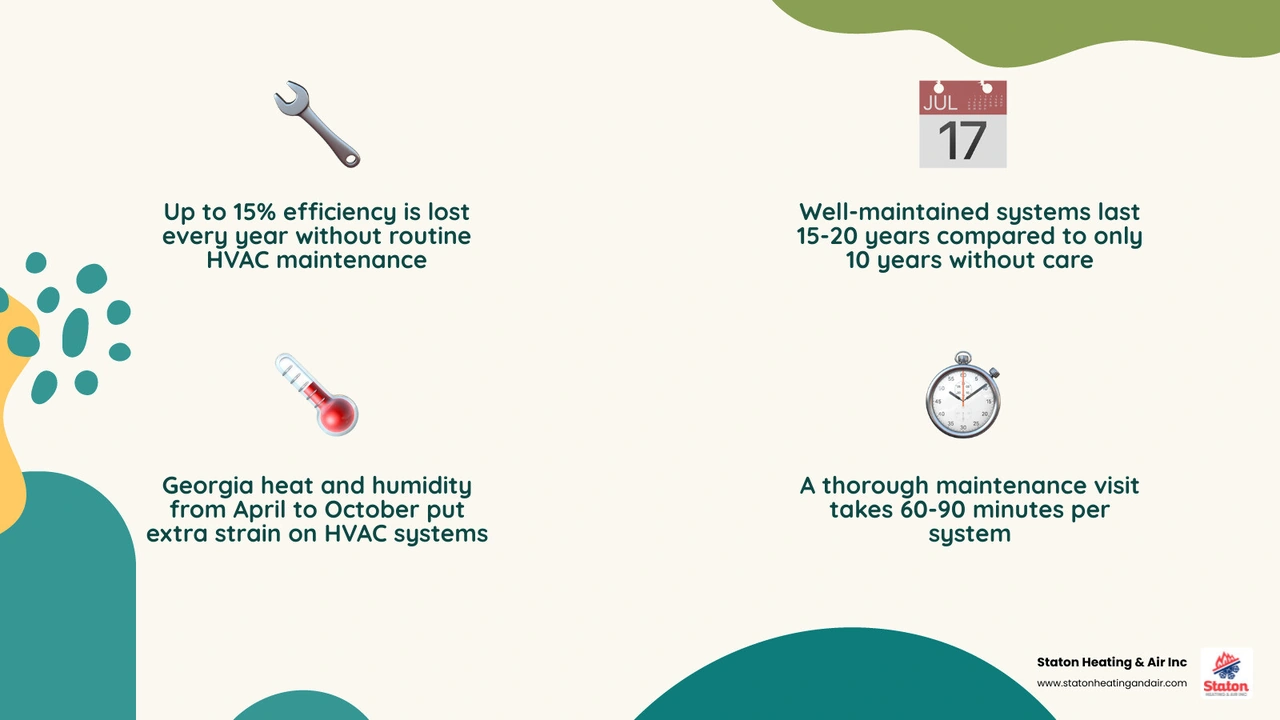
Most thorough visits take between one and one and a half hours per system.
For Metro Atlanta homeowners in areas like Cumming, Alpharetta, and Kennesaw, staying on top of HVAC maintenance is especially important. Georgia's heat and humidity push systems hard from April through October — and a skipped tune-up can quietly chip away at efficiency, shorten your equipment's life, and set the stage for a breakdown on the hottest day of the year. According to industry data, a neglected system can lose up to 15% of its efficiency every year, and well-maintained units last 15–20 years compared to around 10 years for systems that don't get regular care.
Think of it the same way you think about oil changes or dental cleanings — small, routine investments that prevent much bigger, more expensive problems down the road.
Why Regular HVAC Service is Essential for Georgia Homes
Living in North Georgia means experiencing everything from frosty winter mornings in Dahlonega to sweltering, sticky July afternoons in Marietta. Our heating and cooling systems do not get many breaks. Because our comfort systems run almost continuously throughout the year, they experience massive amounts of wear and tear.
Without proactive care, a home’s heating and air conditioning system will slowly enter a downward spiral of inefficiency. Dust, pollen, and humidity combine to form a layer of grime over sensitive indoor coils. Outdoor units become clogged with grass clippings, pollen, and yard debris. This buildup acts like an insulating blanket, forcing your system to work much harder and run longer cycles just to keep your living room comfortable.
By prioritizing proactive care, you can expect major improvements in:
- System Lifespan: A well-maintained heat pump, air conditioner, or furnace can easily last 15 to 20 years. Neglected systems, on the other hand, frequently experience catastrophic component failures closer to the 10-year mark.
- Energy Efficiency: When components are clean, calibrated, and properly lubricated, the system draws significantly less power. Keeping up with routine checks prevents the annual efficiency losses that naturally occur as a system ages.
- Indoor Air Quality: Your HVAC system is the lungs of your home. Regular service removes accumulated dust, mold spores, and allergens from the air handler before they can circulate through your bedrooms.
- Managing Georgia Humidity: Our sticky summers require an air conditioner that can pull moisture out of the air effectively. Clean coils and balanced airflow are vital for proper dehumidification.
Taking care of your system is not just about avoiding a breakdown; it’s about protecting your monthly utility budget and keeping your family healthy. To learn more about how routine care keeps your home running smoothly, read about Why Regular HVAC Service is Essential. If you live in North Fulton County, you can also check out our specific guide on HVAC Maintenance Alpharetta to see how local weather patterns impact your system's needs.
What Does an HVAC Maintenance Visit Include?
When a NATE-certified professional arrives at your home in Alpharetta, Roswell, or Woodstock, they should do much more than just glance at your thermostat and swap out your air filter. A real, comprehensive maintenance visit is a highly technical process involving data-driven measurements, safety calibrations, and meticulous physical cleaning.
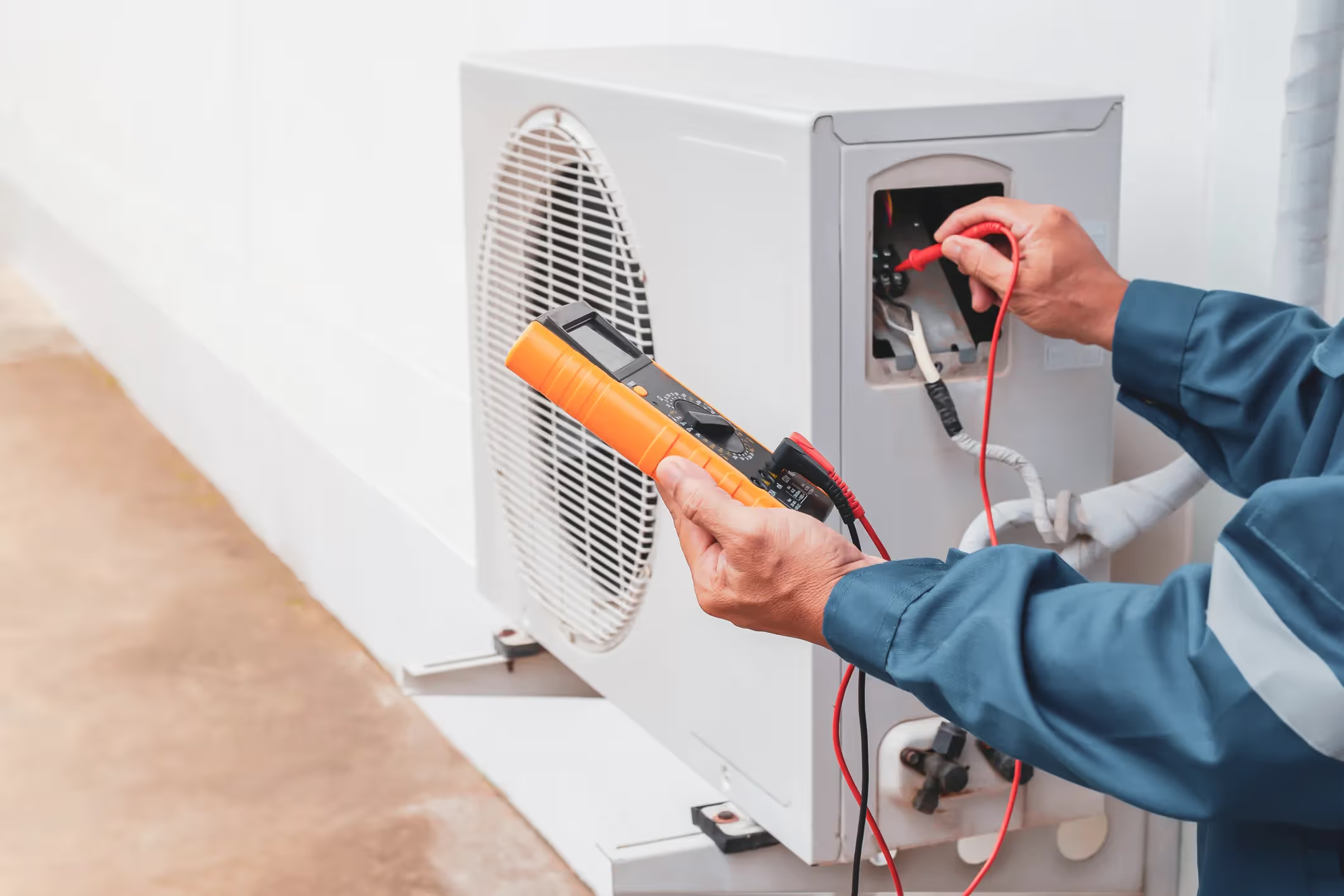
During a thorough service appointment, a technician will focus on three primary areas: electrical system testing, mechanical inspections, and safety control verifications.
- Electrical System Testing: The technician will inspect all wiring, tighten loose electrical connections, and measure the voltage and amperage draw on your motors. They will also test the capacitors. Capacitors are the small, cylindrical parts that store electrical energy to start and run your system's motors. They are the single most common failure point in residential AC units, and catching a weakening capacitor during a routine visit prevents an unexpected system shutdown later.
- Mechanical Inspection and Cleaning: Moving parts require regular attention to minimize friction. Technicians inspect fan blades, clean the blower wheel assembly, and lubricate any moving parts that are not permanently sealed. Reducing friction directly translates to lower power consumption and quieter operation.
- Safety Controls Calibration: Your system relies on various safety switches to shut down if dangerous conditions arise. The technician will test the starting cycle, operation, and shutdown sequence to verify that these safety controls are responsive and properly calibrated.
To get a clearer picture of what to expect when our team visits your home, you can review our detailed breakdown of What HVAC Technicians Do on a Maintenance Visit.
What does an hvac maintenance visit include for cooling systems?
When preparing your home for a long, hot Georgia summer, the maintenance visit shifts its focus to the cooling cycle. The outdoor condenser unit and the indoor evaporator coil must work in perfect harmony to transfer heat out of your home.
During a cooling-focused visit, your technician will perform several critical tasks:
- Cleaning the Condenser Coils: The outdoor unit is constantly exposed to the elements. Dust, dirt, and lawn debris accumulate on the delicate aluminum fins, blocking airflow. The technician will wash the condenser coils using low-pressure water to remove this buildup, which can improve heat transfer and lower energy consumption.
- Checking Refrigerant Levels: Refrigerant does not get "used up" like fuel. If your system is low on refrigerant, it means there is a leak. The technician will measure subcooling and superheat to verify that the charge is exactly where the manufacturer intended. Running a system with even a slightly incorrect refrigerant charge can reduce efficiency by 15% or more and put extreme stress on the compressor.
- Clearing the Condensate Drain: As your air conditioner cools the air, it also removes moisture. This water drips into a condensate pan and exits through a drain line. Over time, algae, mold, and dust can clog this line. The technician will mechanically flush the drain line to prevent water backups, which are the leading cause of water damage to ceilings and floors in Atlanta homes.
- Assessing the Blower Motor: The indoor blower motor must push the cooled air through your ductwork. The technician will check the motor's amperage draw and clean the fan blades to ensure optimal airflow throughout your home.
Keeping these components clean and calibrated is the best way to ensure reliable cooling all summer long. Discover more about the advantages of these services by reading about the Benefits of Regular AC Maintenance and how you can maximize your Efficiency with Routine AC Service.
What does an hvac maintenance visit include for heating systems?
When the autumn air rolls into Suwanee, Milton, and Johns Creek, it is time to prepare your system for the heating season. Heating maintenance is focused heavily on safety, particularly if you use a gas furnace.
During a heating-focused visit, a technician will perform several specialized checks:
- Inspecting the Heat Exchanger: This is the most critical safety check of the entire year. The heat exchanger keeps dangerous combustion gases, like carbon monoxide, separate from the air circulating through your home. The technician will use specialized cameras to inspect the heat exchanger for any cracks, rust, or weak spots. A cracked heat exchanger is a severe safety hazard that can leak carbon monoxide into your living spaces.
- Cleaning the Burner Assembly: Over time, carbon soot and dust can build up on your furnace burners, leading to improper combustion. The technician will clean the burners and adjust the flame sensor to ensure safe, efficient ignition.
- Testing Gas Connections and Pressure: The technician will check for gas leaks along the connection lines and measure the manifold gas pressure. Correct gas pressure ensures your furnace burns fuel cleanly without overheating.
- Checking the Flue Pipe: The flue pipe vents combustion byproducts safely outside your home. The technician will inspect the vent pipe for blockages, rust, or loose joints to ensure toxic gases are exhausting properly.
Whether you run a traditional gas furnace or a modern electric heat pump, seasonal heating maintenance is essential for your family's safety and comfort. For more practical advice on keeping your entire system in great shape, refer to our guide on How to Maintain Your Heating and Cooling System.
How Often Should You Schedule HVAC Maintenance?
For the best results, we recommend scheduling professional HVAC maintenance twice a year: once in the spring for your air conditioning system and once in the fall for your heating system. If you use a heat pump system that handles both heating and cooling, it still requires bi-annual service because it works hard all year long.
Scheduling your visits during these transitional seasons is highly beneficial. HVAC companies are typically busiest during the peak of summer and the dead of winter when emergency breakdowns occur. By scheduling your tune-ups in the spring and fall, you can secure a convenient appointment time and ensure your system is fully prepared before extreme weather hits.
To help you visualize how seasonal maintenance tasks differ, we have put together a quick comparison table:
| Spring Cooling Maintenance Tasks | Fall Heating Maintenance Tasks |
|---|---|
| Wash and straighten outdoor condenser coils | Inspect heat exchanger for cracks and rust |
| Check refrigerant levels and pressures | Clean and adjust burner assembly and flame sensor |
| Flush condensate drain line and clean drain pan | Test gas valve, connections, and manifold pressure |
| Measure blower motor amperage and inspect fan | Inspect flue exhaust pipe and draft inducer |
| Test compressor capacitors and contactors | Verify heat pump reversing valve and defrost cycle |
| Calibrate thermostat for cooling cycles | Test furnace safety limit switches and controls |
Keeping to this twice-yearly schedule is the most effective way to prevent mid-season breakdowns and keep your monthly utility bills manageable. For a deeper dive into timing your service visits perfectly, check out our HVAC Service Frequency Complete Guide.
DIY Maintenance vs. Professional HVAC Service
While professional maintenance is essential for the technical aspects of your system, there are several simple tasks homeowners in Cumming, Duluth, and Dunwoody can perform to support their system between visits.
Tasks Homeowners Can Perform Themselves:
- Change the Air Filter Regularly: This is the single most important task a homeowner can do. Standard 1-inch filters should be checked monthly and replaced every 30 to 90 days. If you have pets, allergies, or live in a dusty area, you will need to change them more frequently. A heavily clogged filter restricts airflow, forcing your system to run longer, which can cause the evaporator coil to freeze up.
- Keep the Outdoor Unit Clear: Walk outside and check your outdoor condenser unit regularly. Ensure there are at least two feet of clear space around the entire unit. Trim back any bushes, vines, or tall grass, and clear away fallen leaves or twigs.
- Keep Vents and Registers Unobstructed: Make sure your indoor supply and return vents are not blocked by furniture, rugs, or drapes. Obstructed vents disrupt airflow, creating temperature imbalances and increasing static pressure within your ductwork.
Tasks That Require a Professional:
Anything that involves opening up the indoor air handler or outdoor condenser cabinet should be left to a licensed professional. Working with high-voltage electrical components, handling chemical refrigerants (which requires EPA Section 608 certification), and conducting combustion analysis on gas furnaces are highly dangerous tasks that require specialized diagnostic tools and training.
For more helpful pointers on how you can keep your home comfortable between professional visits, read our AC Maintenance Tips for Comfort.
Red Flags of an Incomplete Maintenance Visit
Not all HVAC maintenance visits are created equal. Unfortunately, some providers offer cheap "tune-ups" that amount to little more than a quick filter swap and a visual check of your thermostat. As a homeowner, it is important to know what to watch out for so you can ensure you are getting a thorough, high-quality service.
Watch out for these common red flags of a poor maintenance visit:
- The "In and Out" Visit: A thorough, professional maintenance visit for a single system should take between one and one and a half hours. If a technician is in and out of your home in under 20 minutes, they did not perform a complete inspection.
- Never Opening the Air Handler: Your indoor air handler contains the evaporator coil, blower motor, and condensate drain pan. If the technician never opens this cabinet, they cannot clean the coil, inspect the blower, or flush your drain line.
- No Diagnostic Tools or Measurements Taken: A professional technician should use digital gauges, multimeters, and thermometers to measure electrical draw, static pressure, and temperature splits. If they do not take these measurements, they cannot accurately assess your system's health.
- Skipping the Drain Line: Simply looking at your condensate drain is not enough. A proper visit must include a physical flush of the drain line to clear out algae and debris. Skipping this step leaves your home vulnerable to water damage and mold.
Thorough cleaning and moisture management are also critical for your indoor air quality. When moisture is allowed to pool in your drain pan, it can quickly lead to biological growth. To learn more about how proper maintenance protects your home, read about How Proper HVAC Maintenance Prevents Mold Growth.
Frequently Asked Questions About HVAC Maintenance
We receive many questions from homeowners across Metro Atlanta about what happens during a maintenance visit. Here are some of the most common questions we hear:
How long does a typical HVAC maintenance visit take?
A thorough, professional maintenance visit typically takes between 60 to 90 minutes per system. If your home has multiple units (for example, one system for the main floor and a separate system for the upstairs), the visit will take longer—usually about two to three hours for a two-system household. The exact time depends on the age of your equipment, its location (such as a tight crawlspace or attic), and when it was last serviced.
Will regular maintenance keep my manufacturer warranty valid?
Yes, in almost all cases. Most major HVAC manufacturers (such as Carrier, Lennox, and Trane) explicitly state in their warranty terms that the system must be professionally maintained every year. If a major component—like your compressor or heat exchanger—fails within the warranty period, the manufacturer may require proof of regular professional service before covering the replacement part. Keeping your service reports and receipts is your insurance policy to protect your investment.
What are the signs that my system needs immediate service?
While routine maintenance is designed to prevent issues, you should call for a professional evaluation immediately if you notice any of these warning signs:
- Strange Noises: Grinding, squealing, rattling, or banging sounds coming from your indoor or outdoor units.
- Uneven Temperatures: Some rooms feeling freezing cold while others are warm and stuffy.
- Short Cycling: The system turning on and off frequently without ever reaching your thermostat's set temperature.
- Unusual Odors: Musty smells (indicating mold or mildew in the ductwork) or burning odors (indicating electrical issues or furnace problems).
- Spiking Utility Bills: A sudden, unexplained increase in your monthly energy costs.
If you notice any of these symptoms, do not wait for your scheduled seasonal tune-up. Addressing these issues early can prevent minor problems from turning into major repairs. For more tips on keeping your home cozy, read our guide on HVAC Maintenance for Comfort.
Conclusion
Your heating and air conditioning system is one of the most significant investments you will make in your home. Keeping it running safely, efficiently, and reliably requires regular, professional care. Knowing what does an HVAC maintenance visit include allows you to hold your service provider to a high standard and protect your home's comfort.
At Staton Heating & Air Inc, we have been serving homeowners in Cumming, GA, and across the Metro Atlanta area since 1972. Our NATE-certified technicians are committed to providing thorough, honest, and high-quality maintenance services. We take pride in our work and always focus on customer satisfaction—which is why we were named 2024's Best HVAC Company in Cumming.
Don't wait for the heat of summer or the chill of winter to find out if your system is up to the task. Schedule your professional HVAC service today and let our expert team give you the peace of mind you deserve.
What Our Customers Are Saying



Have a comfort question?
Our family-owned team has answered them for over 50 years. Reach out anytime.
Get in touchFrom our family to yours
Ready for comfort done right?
Family-owned since 1972. Call now or book online — a real person is standing by to help.
Licensed & Insured · GA LIC# CU400373 · NATE Certified · 100% Satisfaction Guarantee